
01 · Principle
From lotus leaf to chip — nature's superhydrophobic blueprint
We systematically studied superhydrophobic species in nature — lotus leaves, water striders, butterfly and cicada wings, mosquito eyes, rose petals, rice leaves, salvinia and pansy petals — and identified two universal traits: ① micro/nano-scale rough structure + ② low-surface-energy wax coating. Any material treated this way becomes superhydrophobic. Validated on glass, cotton, textiles, paper, metal, building materials and more.
- 01
① Micro/nano-scale rough structure
The surface features micro- and nano-scale geometry that traps air pockets in its texture, preventing liquids from wetting it.
- 02
② Low-surface-energy wax coating
A low-surface-energy wax film is deposited over the micro/nano structure. In principle, any surface treated this way becomes superhydrophobic.


02 · Technology
Proprietary R&D · In-House Production · Scaled Manufacturing
- Partnered with dozens of listed Chinese companies on PCBA board-level protection solutions
- Scaled volume production with consistent quality
- Internationally leading technology, backed by third-party test reports
03 · Advantages
Ten decisive advantages
Exceptional waterproofing
Contact angle >150°, >100 days in water without wetting; powered water-spray demo available
Superior short-circuit protection
1.5× the short-circuit protection of 3M fluorinated fluid (oxidizing-solution test); blocks ion migration
Outstanding corrosion resistance
Salt spray 200/500/1,000/2,000 h options; contact angle unchanged after acid/alkali immersion
Inherent self-cleaning
Lotus-leaf effect — dust is carried away by water droplets without detergents
Safe and eco-friendly
Non-flammable, odorless, non-toxic, no flash point — safe for operators and the environment
Simple application and repair
Dip for 2–10 s, air-dry in ~3 min; single-component, high-efficiency application with no spray equipment needed; manual or machine coating, no masking required; easy re-coat on damage
Dip-coated, zero impact on conductivity
Nano-tunneling effect: conducts vertically, insulates horizontally — resistance increase only 0.004 mΩ
Complete coverage, no blind spots
Dip coating reaches every surface — eliminates spray-coating dead zones
Excellent thermal dissipation
Thermal conductivity 3.3 W/mK — 3–10× higher than conventional conformal coating
Anti-condensation and anti-frost
No frost after 6.5 h on a −10℃ cold plate (Hisense test); the only product that prevents condensation — condensation is the No. 1 killer of electronics
04 · Comparison
Head-to-head comparison
First mass-produced superhydrophobic coating — world-leading performance verified by independent third-party testing
05 · Applications
Validated across major electronics sectors
One superhydrophobic protection system, proven in multiple industries. ~1±0.1 μm thick, 160° contact angle, fully non-wetting.
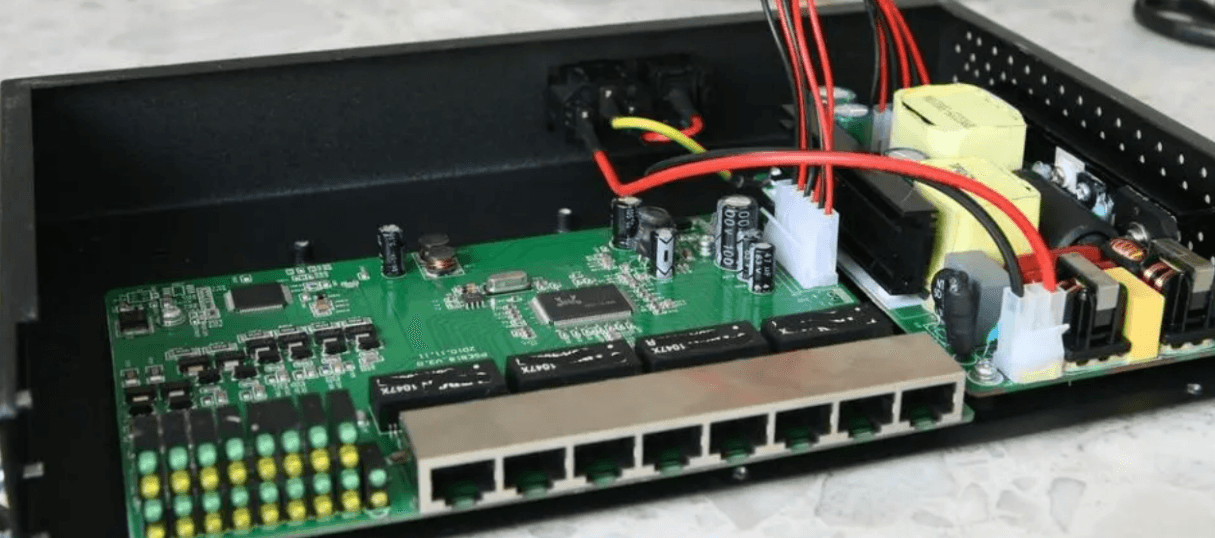
Smart locks
Industry challenge
Indoor/outdoor temperature swings cause PCB condensation, leading to corrosion, short circuits and current leakage
06 · Contact
Talk to sales, start a sample test
Tell us about your project. Our engineering team replies within one business day with samples and a full technical proposal.
First mass-produced superhydrophobic coating — world-leading technology
- Validated with Huawei and Midea — the only anti-condensation product, widely used for PCBA protection
- Independent third-party test reports: RoHS, REACH, PFAS
- 60+ proprietary patents (US, Germany, UK) — independent R&D and manufacturing; long track record in nano-material R&D and industrial deployment